
Skip to content
Vergo
A warehouse worker lifting a container onto a cart in a distribution facility

WORKPLACE MOVEMENT ANALYSIS

Understand physical work.
Improve how it’s done.

Vergo turns short task videos into clear movement findings, practical recommendations and documented assessments that support injury prevention and better work design.

IDENTIFY RISK / IMPROVE WORK / DOCUMENT PROGRESS

Two practical outputs.
Real workplace insight.

Movement Risk Video

See risk as the work happens.

Illustrative pose trace following visible head, shoulder, arm, trunk, hip, knee and ankle points as a worker lifts a container.
Sample frame
Visual movement analysis helps teams understand physical demands and identify practical opportunities to improve the task.

Movement Risk Report

Understand what’s driving the risk—and what to do about it.

ILLUSTRATIVE EXAMPLE

Movement Risk Assessment

Task
Container transfer to cart
Location
Packing area — Line 2
Date
Sample assessment
Assessment method
Video-based movement analysis
Overall risk levelModerate

Key findings

  • Repeated forward trunk flexion when lifting from the lower shelf.
  • Load handled away from the body during transfer to the cart.
  • Reaching above shoulder height when placing the top container.

Recommendations

  • Raise the pick point to between knee and waist height.
  • Position the cart so the load is transferred within arm's reach.
  • Limit top-shelf storage to lighter, less frequently handled items.

Supporting frames

Lift initiation
Transfer
Placement
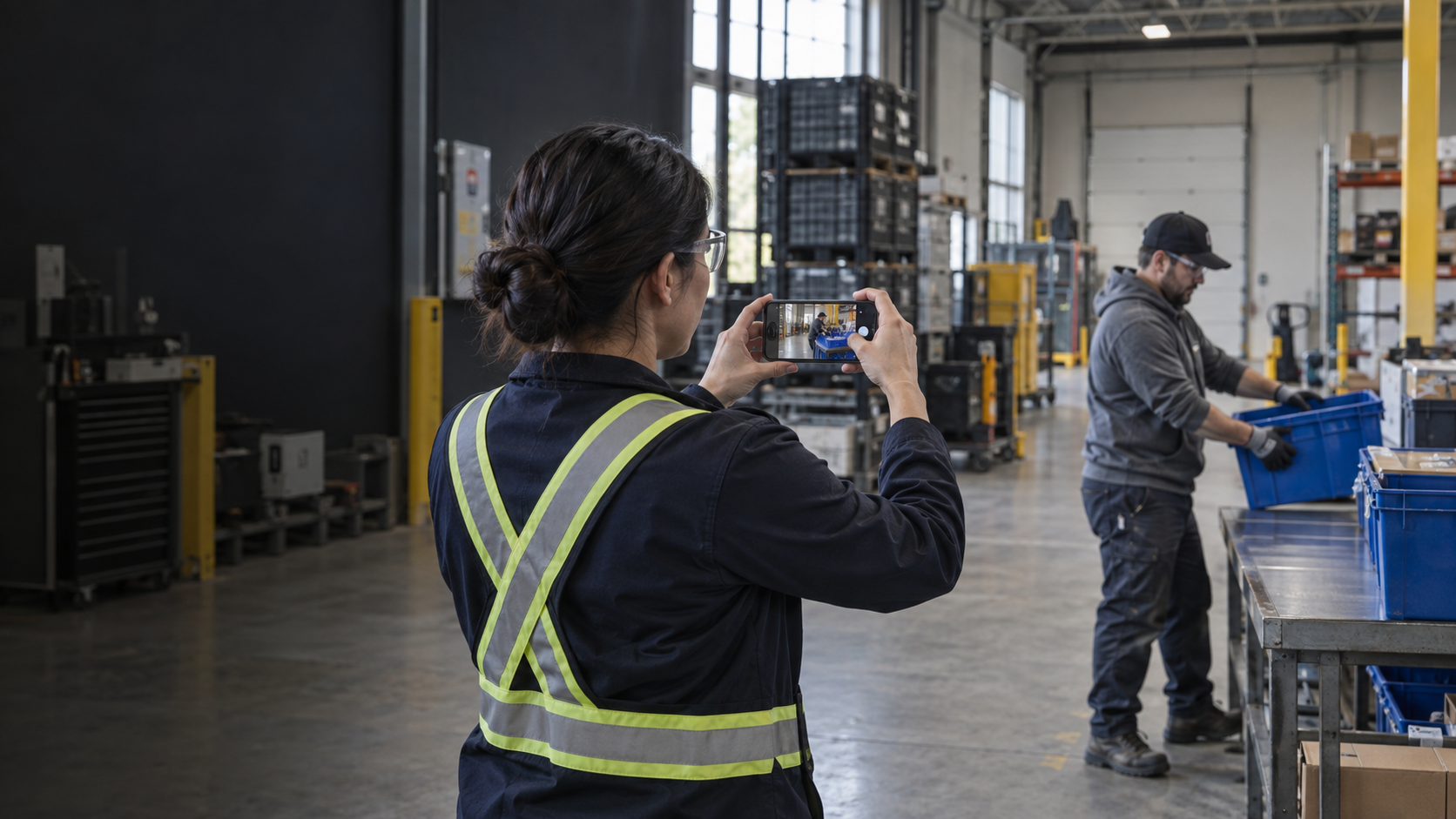
Colleagues reviewing a workplace assessment

Assess. Improve. Reassess.

Make a change. Record the task again. See how the risk profile improves.

  1. 01

    Assess

    Identify where risk occurs.

  2. 02

    Improve

    Make changes to the work, equipment or layout.

  3. 03

    Reassess

    See the difference.

A safer, more productive workforce.

Identify risk

Understand physical demands across tasks.

Improve work

Test and implement practical changes.

Make it easier

Reduce time spent on documentation.

Build on progress

Track improvements over time.

One workplace—or many.

Use Vergo within an individual organization or through multi-employer initiatives with industry associations, safety organizations and program partners.

Explore Solutions

WHY IT MATTERS

The cost of physical strain rarely appears in one place.

When physically demanding work contributes to an injury, the impact can extend well beyond the claim itself. Employers may face several costs and operational pressures at the same time.

  1. Physical demand

    Lifting, reaching, repetition.

  2. Discomfort or injury

    Strain builds over a cycle.

  3. Absence

    Time away from the task.

  4. Overtime and cover

    Others absorb the work.

  5. Disruption and cost

    Output, admin and premiums.

Diagram: physical demand can lead to discomfort or injury, then absence, then overtime and replacement cover, then operational disruption and cost.

1 in 4

Canadian wage loss claims had not moved off compensation by 90 days in 2023.

Approximate. Broader workplace injury context, not limited to musculoskeletal injuries.

AWCBC, Canadian Workers’ Compensation System, 2023 Year at a Glance

Up to 100%

Experience rating surcharge possible in British Columbia when claim costs run above comparable businesses.

British Columbia example. Lower claim costs may earn discounts of up to 50 percent. Premium systems differ across Canada.

WorkSafeBC, How to reduce your premiums

Vergo supports better workplace decisions. It does not promise a guaranteed injury reduction, premium reduction or financial return.

Two workers reviewing an assessment on a tablet in a manufacturing facility

READY TO SEE VERGO IN ACTION?

Better-designed work starts with better understanding.

Book a demo to see the platform, review a sample assessment and discuss how Vergo can support your safety and operational goals.