
Skip to content
Vergo
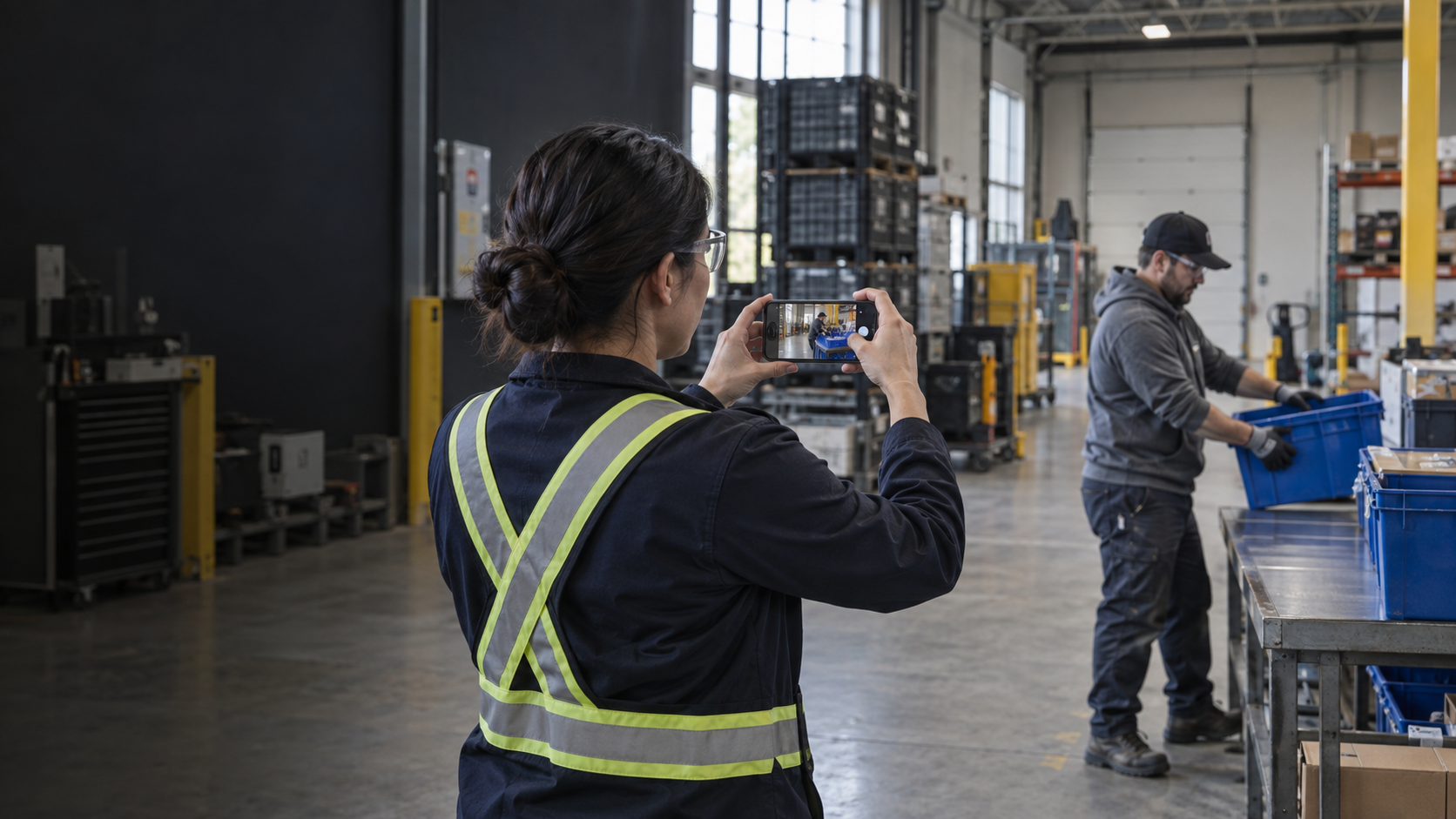
A worker recording a task on a phone while a colleague handles containers in a facility

THE VERGO PLATFORM

From workplace
video to practical
action.

Record a task. Turn visible movement into structured findings. Document practical improvements your team can act on.

ILLUSTRATIVE EXAMPLE

Movement Risk Assessment
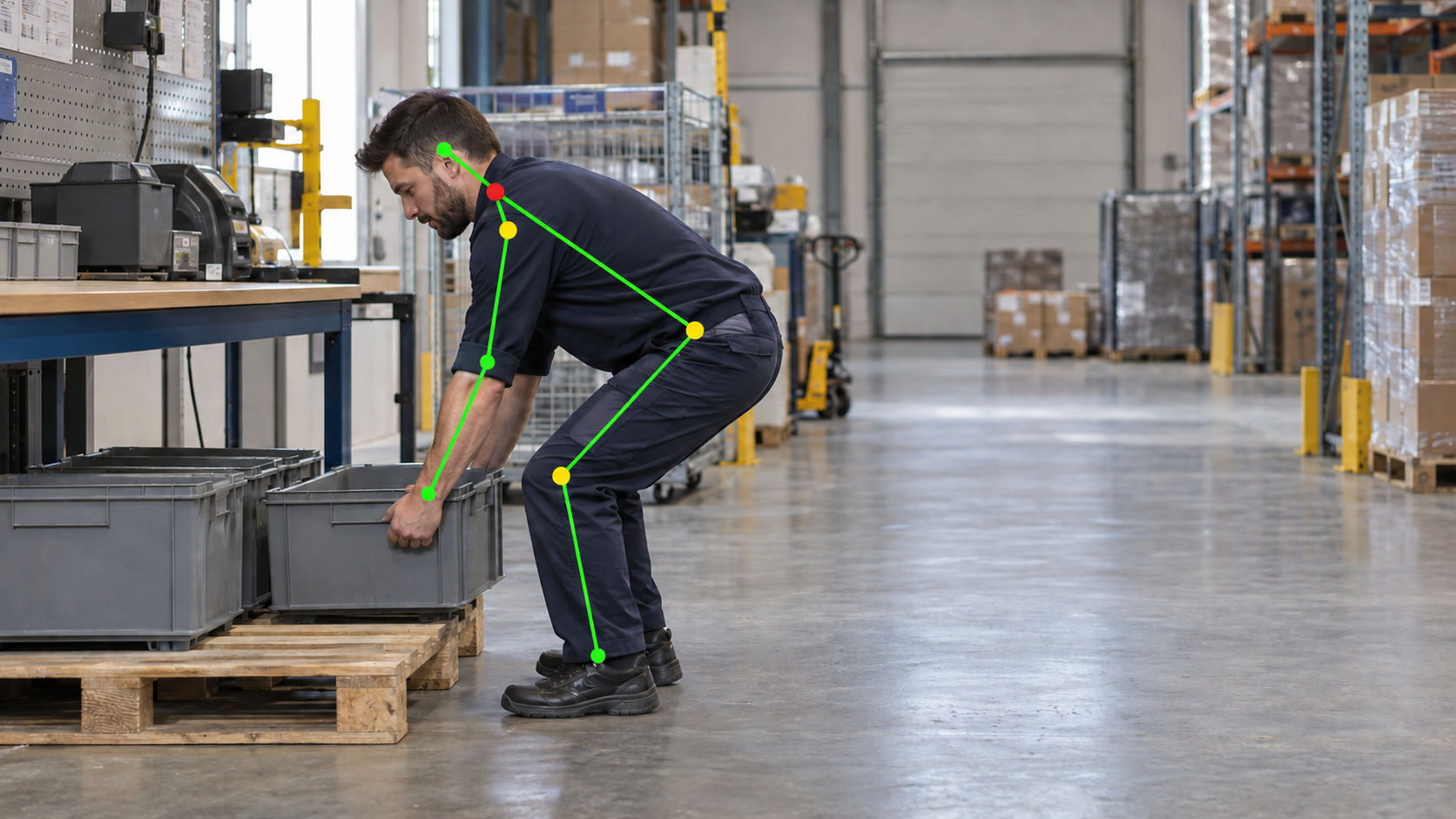
Illustrative pose trace following visible head, shoulder, arm, trunk, hip, knee and ankle points as a worker lifts a container.
Task
Container transfer to cart
Location
Packing area — Line 2
Date
Sample assessment
Assessment method
Video-based movement analysis
Overall risk levelModerate

Key finding

Forward trunk flexion during low lifts.

Recommendation

Raise the pick point to working height.
How Vergo works

Three stages, using equipment your team already has.

  1. Record

    A short task video, typically 35 seconds.

  2. Analyze

    Visible movement becomes structured findings.

  3. Recommend

    Practical, task specific options.

  4. Improve

    The team changes the work.

  5. Reassess

    Record again and document the difference.

Diagram: record, analyze, recommend, improve, reassess.
A worker recording a task on a phone in a facility
01 · Record
Illustrative pose trace following visible head, shoulder, arm, trunk, hip, knee and ankle points as a worker lifts a container.
02 · Analyze
The same task performed at a safer working height after a change
03 · Improve

What goes into an assessment

A review draws on the recording and on what the workplace team provides about the task.

GOES IN

  • Short task recording
  • Workplace context from the team

COMES OUT

  • Movement findings
  • Supporting frames
  • Practical recommendations
Diagram: a short recording plus workplace context produces movement findings, supporting frames and practical recommendations.
  • The task and workplace context

    What is being handled, where the task sits in the process and what the work area allows.

  • Visible movement and posture

    Trunk position, shoulder and arm position and how the body moves through the cycle.

  • Lifting, reaching, repetition and sustained positions

    Where in the cycle the demand occurs, and how often it is repeated.

  • Work height and reach distance

    Where the load starts, where it ends up and how far it travels from the body.

  • Tools, equipment and layout

    What the worker holds or triggers, and how the workstation and storage are arranged.

  • Task sequence and material flow

    The order of steps and how product arrives, moves and leaves the work area.

  • Changes that may be practical

    What the workplace could realistically test, based on the information provided by the team.

What a Vergo assessment can include

A deliberately abbreviated preview showing the shape of an assessment.

Task
Container transfer to cart
Location
Packing area, Line 2
Illustrative overall risk levelModerate

High level movement findings

  • Repeated forward trunk flexion when lifting from below knee height.
  • Load handled away from the body during the transfer.
  • Shoulder elevation when placing the container on the upper level.

Recommendation categories

  • Work height
  • Reach distance
  • Storage and material flow

Supporting frames

Illustrative pose trace following visible head, shoulder, arm, trunk, hip, knee and ankle points as a worker lifts a container.
Lift initiation
Illustrative pose trace following visible head, shoulder, arm, trunk, hip, knee and ankle points as a worker lifts a container.
Transfer

Reassessment

After a change is made, the same task is recorded again and reviewed the same way, so the team can compare conditions and document what actually changed.

Illustrative, abbreviated example. Client deliverables contain additional task specific analysis and documentation.

Built on established methods

Dalhousie University

Movement analysis validation work completed with Dalhousie University’s Faculty of Kinesiology.

National Research Council of Canada

Technology development supported by the National Research Council of Canada Industrial Research Assistance Program.

Support does not constitute product validation or endorsement by the National Research Council of Canada.

Before and after

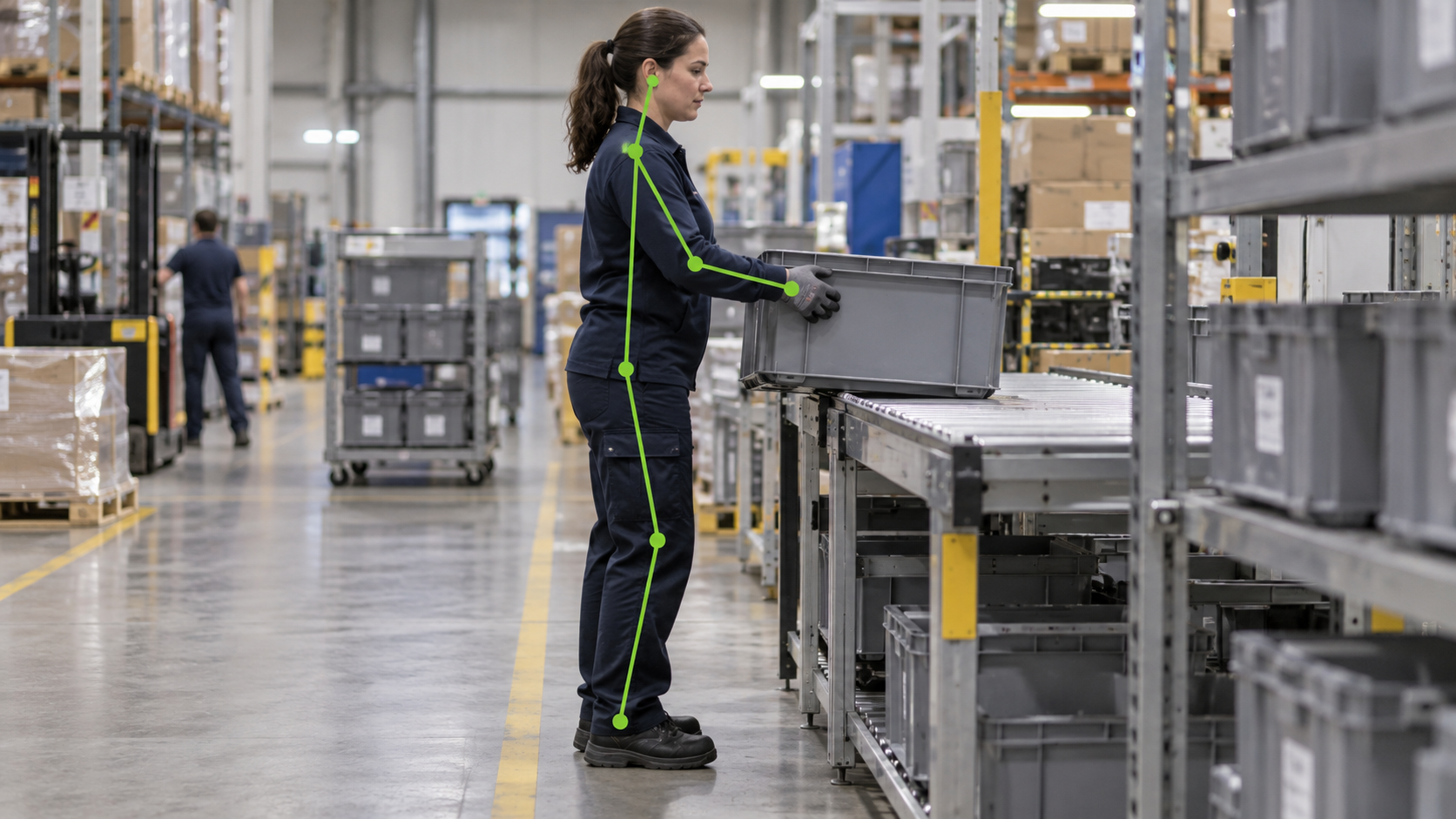
A workplace can record the task, make a practical change such as raising the work height, then record it again. Reviewing both recordings the same way documents what changed in how the task is performed.

Illustrative pose trace following visible head, shoulder, arm, trunk, hip, knee and ankle points as a worker lifts a container.

Illustrative movement visualization

Before: load handled below knee height.
After the change: a worker handling a container at waist height beside a conveyor with an upright posture
After: the same task once the work height was changed.

Technology supports the assessment. Workplace knowledge guides the decision.

Vergo organizes movement findings, supporting frames and assessment documentation so workplace teams can make informed decisions. Safety professionals, operations leaders and workers contribute the task knowledge and context needed to decide what changes are practical.

Vergo supports workplace task review. It is not a medical diagnosis or regulatory determination.

Built for the people improving work

What Vergo does for you depends on your role. Jump to the part of Who It’s For that matches yours.

Frequently asked questions

Two workers reviewing an assessment on a tablet in a manufacturing facility

READY TO SEE VERGO IN ACTION?

Better-designed work starts with better understanding.

Book a demo to see the platform, review a sample assessment and discuss how Vergo can support your safety and operational goals.